
Protect Your Bones: What to Know About Osteoporosis and Bone Loss
Wondering how to keep your bones healthy as you age? Learn what causes bone loss, how osteoporosis develops, and simple ways to protect your bones.
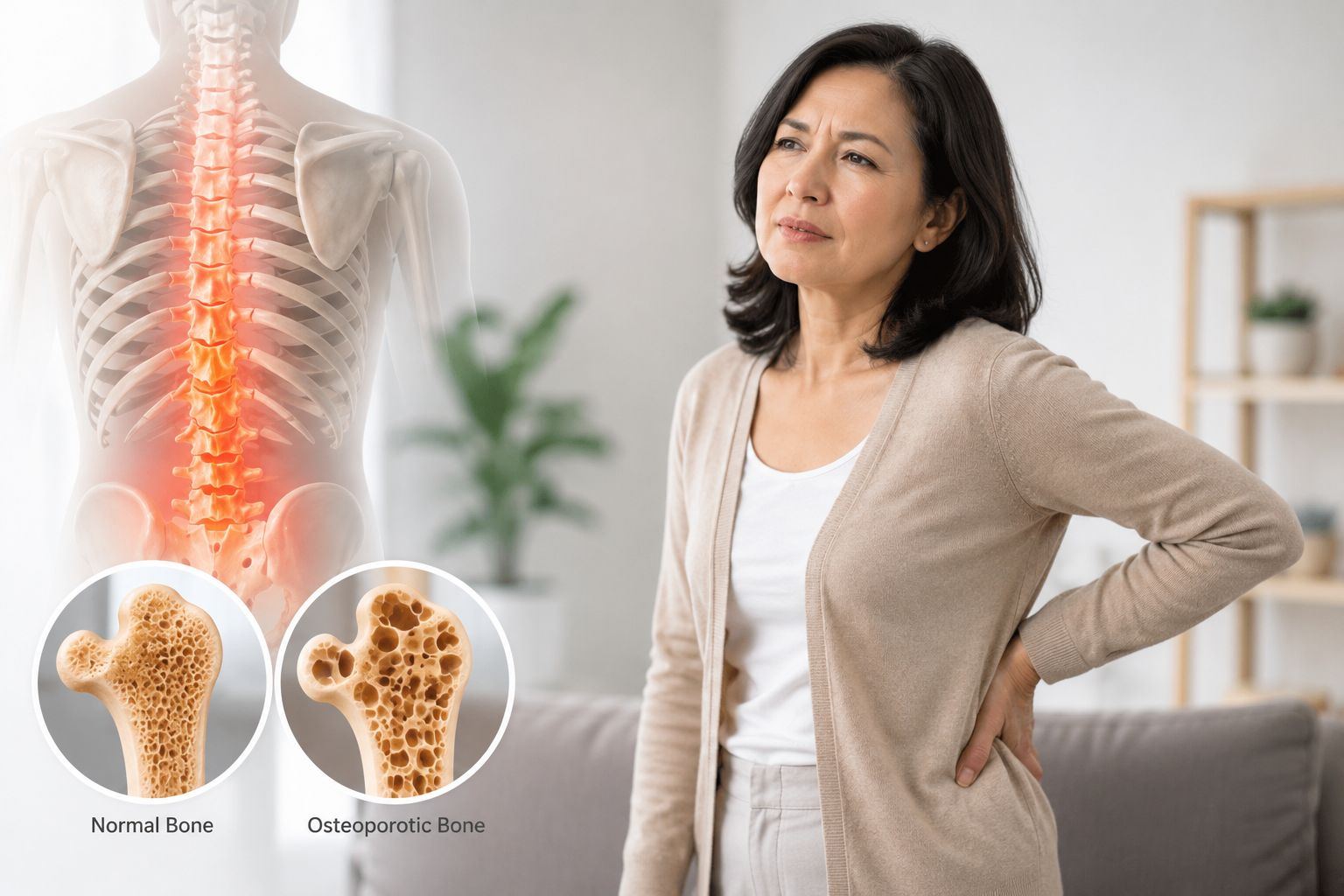
You've been thinking more about your bone health lately. Maybe you've noticed you're not as steady on your feet as you used to be, or you've heard a friend was diagnosed with osteoporosis after a seemingly minor fall. Even if you feel perfectly healthy now, it's natural to wonder what you can do today to keep your bones strong as you age.
This article covers what osteoporosis is, how bone loss happens over time, the risk factors worth knowing about, and practical ways to protect your bones at any age.
What Is Osteoporosis?
Osteoporosis is a condition where bones become weak and more prone to breaking, often without any warning signs until a fracture actually happens. Bone might sound like a fixed, solid structure, but it's actually living tissue that's constantly being broken down and rebuilt. Old bone cells break down old bone, and new bone forms to replace it, a natural cycle that keeps bones strong throughout most of your life.
As you get older, this balance shifts. The body starts to lose bone mass faster than it can build new bone, leading to a gradual loss of bone density over time. According to the Mayo Clinic, this rate of bone loss can accelerate significantly after menopause for women, and it also increases for men as they reach their senior years, particularly men 70 and older.
Osteoporosis develops gradually and often without noticeable symptoms, which is why it's sometimes called a "silent disease. Many people don't realize they have low bone density until they break a bone from a fall that wouldn't have caused an injury in someone with healthy bones.
Risk Factors for Osteoporosis
Certain factors increase your risk for osteoporosis, some of which you can influence and others you can't. Age is one of the biggest factors, since bone loss naturally speeds up after age 50 for most people. Women face a higher risk than men, particularly after menopause, when a drop in estrogen accelerates the loss of bone mass.
Other risk factors for osteoporosis include a family history of the condition, having a smaller body frame, not getting enough calcium and vitamin D over the years, smoking, and drinking alcohol heavily. Certain medications and other health conditions can also affect bone health, so it's worth mentioning your full medical history when discussing bone density with a doctor.
Everyone builds up what's called peak bone mass by their late twenties or early thirties, and the more bone mass you build during that time, the more you have in reserve as natural bone loss begins later in life. This is one reason healthy habits earlier in life have a real effect on your bone strength decades down the road.
How to Keep Your Bones Healthy
There's a lot you can do to help slow bone loss and support bone health at any age. Getting enough calcium and vitamin D is one of the most important steps, since calcium helps build bone and vitamin D helps your body actually absorb it. Dairy products, leafy green vegetables, and calcium-fortified foods are excellent sources of calcium. If you're not getting enough through your diet, a healthcare provider can help determine whether a calcium supplement is appropriate for your individual needs.
Weight-bearing exercise and strength training both play a meaningful role in helping build strong bones. Weight-bearing exercise, like walking, dancing, or climbing stairs, forces your bones to work against gravity, which helps strengthen bones over time. Strength training builds muscle, and strong muscles help support and protect the bones around them, which also helps slow down bone loss in the process.
A few other habits support bone health long term. Avoiding smoking, limiting alcohol, and maintaining a healthy body weight all reduce strain on your skeletal system and help protect bone health as you age.
Screening and Prevention
A bone density scan, sometimes called a DEXA scan, is the standard way doctors measure bone mineral density and check for osteoporosis or osteopenia, an earlier stage of bone loss. This simple, painless test can catch low bone density before a fracture happens, which gives you a chance to start treatment or lifestyle changes earlier.
Doctors generally recommend osteoporosis screening starting around age 65 for women, though anyone with significant risk factors may be advised to get screened earlier. A telehealth visit is a convenient way to start this conversation, since a doctor can review your risk factors, discuss whether a bone density scan is appropriate, and help coordinate that testing without requiring an initial in person visit.
If a scan shows low bone mass or osteoporosis, treatment options can include calcium and vitamin D supplementation, medications that help slow bone loss or build new bone, and continued weight-bearing exercises. People with osteoporosis are also often encouraged to focus on fall prevention, since a fracture is the main risk associated with this condition.
Simple Ways to Help Prevent Falls
Because osteoporosis often isn't discovered until a fracture occurs, preventing falls is just as important as maintaining strong bones. A few ways to help prevent falls at home:
Keep walkways clear of clutter and loose rugs
Add grab bars in the bathroom if balance is a concern
Wear supportive, non-slip shoes indoors and out
Have your vision checked regularly, since poor eyesight increases fall risk
Balance and strength training exercises, like tai chi or simple resistance exercises, can also help prevent falls by improving stability and reaction time. Combined with good bone health habits, these small changes can meaningfully lower your risk of a fracture as you get older.
Protecting your bones is something you can start at any age, whether you're actively trying to prevent osteoporosis or already managing low bone density. Small, consistent habits around diet, exercise, and screening add up over time, helping you stay active and strong for years to come.
This blog is for informational purposes only and is not a substitute for professional medical advice, diagnosis, or treatment. Always consult your doctor or a qualified healthcare provider with any questions you may have regarding a medical condition.
Ready to speak with a board-certified physician?
Get expert care from the comfort of your home — no insurance required.