
Treat Hemorrhoids at Home: Remedies and Self-Care
Treat hemorrhoid symptoms at home with natural remedies. Learn to reduce swelling of external haemorrhoids, prevent constipation, and care for swollen veins in anus or rectum.
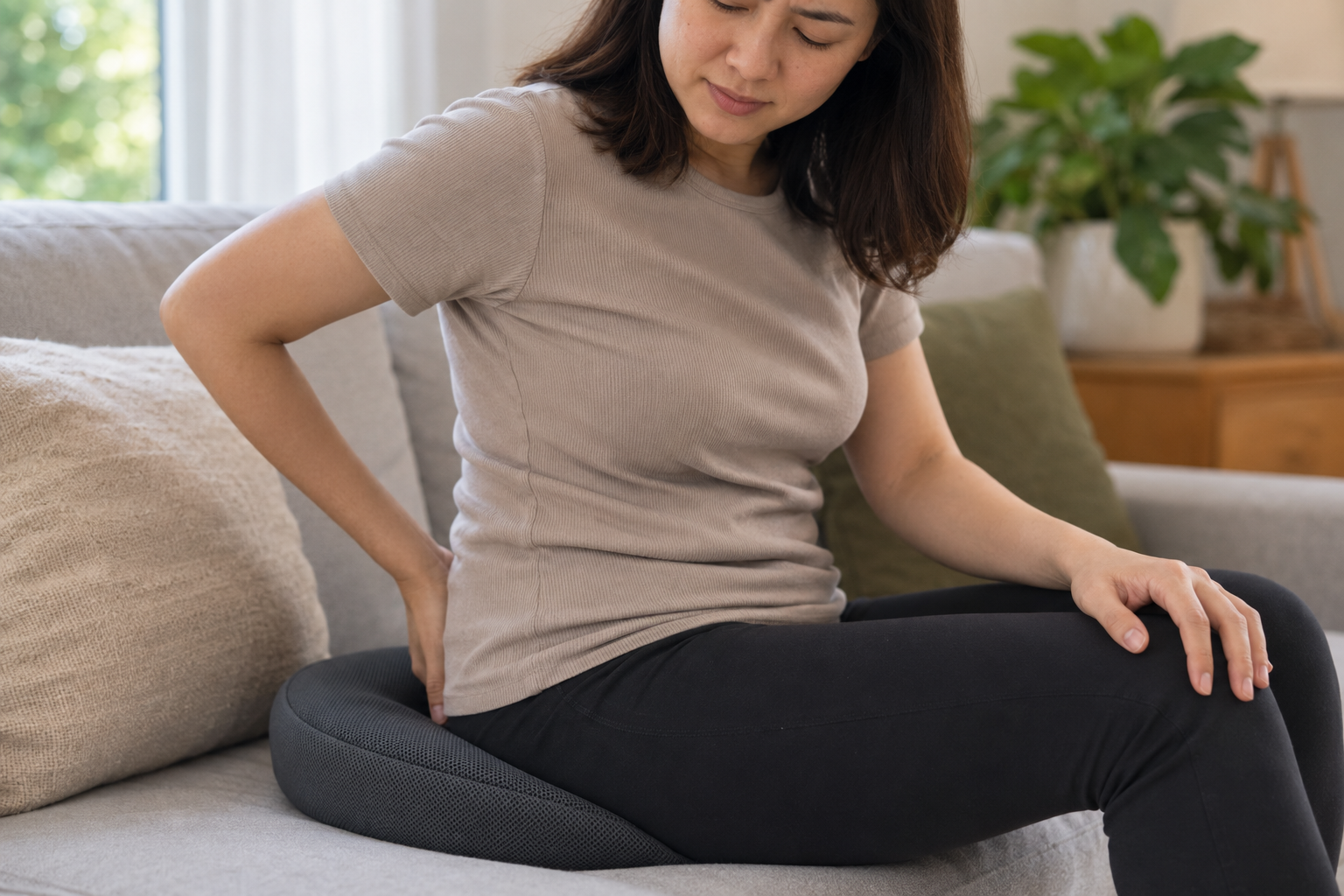
You noticed a small amount of blood on the toilet paper after your last bowel movement, and you've had a dull ache and persistent itching around your anus for the past few days. It's uncomfortable enough that sitting for long periods has started to become a challenge.
This article covers what hemorrhoids actually are, home remedies that can help ease your symptoms, over-the-counter treatment options, and when it's time to see a doctor instead of managing things on your own.
What Are Hemorrhoids?
Hemorrhoids are swollen veins in the anus and lower rectum. They develop when too much pressure builds up on the veins in that area, causing them to stretch and swell, similar to how varicose veins form in the legs.
There are two main types. An internal hemorrhoid forms inside the rectum and often causes little to no discomfort, since there are fewer pain sensing nerves in that part of the lower part of your colon. Internal hemorrhoids rarely cause pain on their own, though they can lead to rectal bleeding during a bowel movement. An external hemorrhoid develops under the skin around the anus, where nerve endings are more sensitive, which is why external hemorrhoids tend to cause more itching, swelling, and pain.
Hemorrhoids are common, and most people will deal with them at some point, often related to straining, pregnancy, constipation, or simply sitting for long stretches of time.
Common Symptoms of Hemorrhoids
Symptoms of hemorrhoids can vary depending on whether they're internal or external, but a few signs tend to show up across both types:
Itching or irritation around the anus
Rectal bleeding, often noticed on toilet paper or in the stool
Swelling or a small lump near the anus
Discomfort or pain, especially when sitting or during a bowel movement
Painful hemorrhoids are usually external because they develop in an area with many pain-sensitive nerves and can become irritated by wiping, prolonged sitting, or straining during bowel movements. In some cases, an external hemorrhoid can develop a blood clot, called a thrombosed hemorrhoid, which may cause sudden, severe pain, swelling, bleeding, and a firm lump near the anus.
Home Remedies to Treat Hemorrhoids
For many people, treating hemorrhoids at home is enough to get relief within a few days. A few remedies worth trying:
Soak in a warm bath or sitz bath for 10 to 15 minutes, a few times a day
Apply an ice pack to reduce swelling and numb discomfort
Use witch hazel pads to help ease itching and irritation
Try an over-the-counter hydrocortisone cream for short term relief
A sitz bath, a shallow warm water soak for the anal area, is one of the most effective home remedies people can do without a prescription. Warm water helps relax the muscles around the anus and can reduce swelling, especially when done regularly during a flare up.
Adding fiber to your diet is another simple way to treat hemorrhoids and help prevent them from coming back. High-fiber foods like whole grains, fresh fruits, and vegetables help soften stool, which means less straining during a bowel movement. Straining puts direct pressure on the veins in the anal canal, so reducing that pressure over time can genuinely help reduce hemorrhoids and keep new ones from developing.
When Over-the-Counter Treatment Isn't Enough
If home remedies and over-the-counter creams haven't helped after about a week, or if your hemorrhoid symptoms keep coming back, it may be time to consider other treatment options. A doctor can recommend treatments like rubber band ligation, a minimally invasive procedure that cuts off blood supply to the hemorrhoid tissue so it shrinks and falls off on its own. Other options include a solution injected into the hemorrhoid to reduce it, or in more involved cases, hemorrhoid stapling.
A telehealth visit can be a convenient first step if you're not sure whether your symptoms need more than home care. A doctor can review your symptoms, discuss lifestyle changes and treatment options, and prescribe a stronger topical treatment if needed. If symptoms don't improve or a doctor wants to examine the area more closely, they may recommend an in person follow up at that point.
When to See a Doctor for Hemorrhoids
Most minor hemorrhoids resolve with home care and don't require urgent attention. That said, a few signs mean it's time to reach out to a doctor rather than waiting things out.
Any rectal bleeding should be mentioned to a doctor, even if you're fairly confident it's from hemorrhoids. Bleeding can occasionally be a sign of something else going on in the lower part of your colon, including colorectal cancer, so it's worth ruling that out rather than assuming.
You should also see a doctor if you experience severe pain, a hemorrhoid that has prolapsed and won't go back in on its own, or symptoms that don't improve after a week or two of consistent home treatment. A doctor may examine the area, sometimes inserting a lubricated finger into your rectum to check for internal hemorrhoids or rule out an anal fissure, which can cause similar symptoms but needs different treatment.
Hemorrhoids can be uncomfortable, but they're also common and highly treatable. With simple lifestyle changes, over-the-counter treatments, and medical care when needed, most people are able to relieve their symptoms and recover without significant difficulty.
This blog is for informational purposes only and is not a substitute for professional medical advice, diagnosis, or treatment. Always consult your doctor or a qualified healthcare provider with any questions you may have regarding a medical condition.
More Articles
Related Reading
Sep 2, 2026
Sensitive Stomach or IBS? Signs It Might Be Something More
Wondering if your stomach troubles are just an occasional upset stomach or something more like IBS? Here's how to recognize the symptoms of irritable bowel syndrome and know when it's time to talk to a doctor.
Aug 26, 2026
Got a Stomach Bug? Here's How to Manage It and When to See a Doctor
You've been running back and forth from the bathroom since last night, your stomach won't settle, and you're starting to wonder how long this is going to last and whether you should be doing something differently.

Aug 12, 2026
Heartburn or GERD: When Should You See a Doctor?
That burning feeling in your chest shows up after dinner again, and you're reaching for an antacid for the third time this week. It's easy to chalk it up to something you ate, but when it keeps happening, it's worth paying attention.
Ready to speak with a board-certified physician?
Get expert care from the comfort of your home — no insurance required.