
What to Do After a Tick Bite (and When to Worry About Lyme Disease)
Bitten by a tick? Learn what to do after a tick bite, how to remove the tick, spot the rash, and when to worry about Lyme disease to help prevent it.
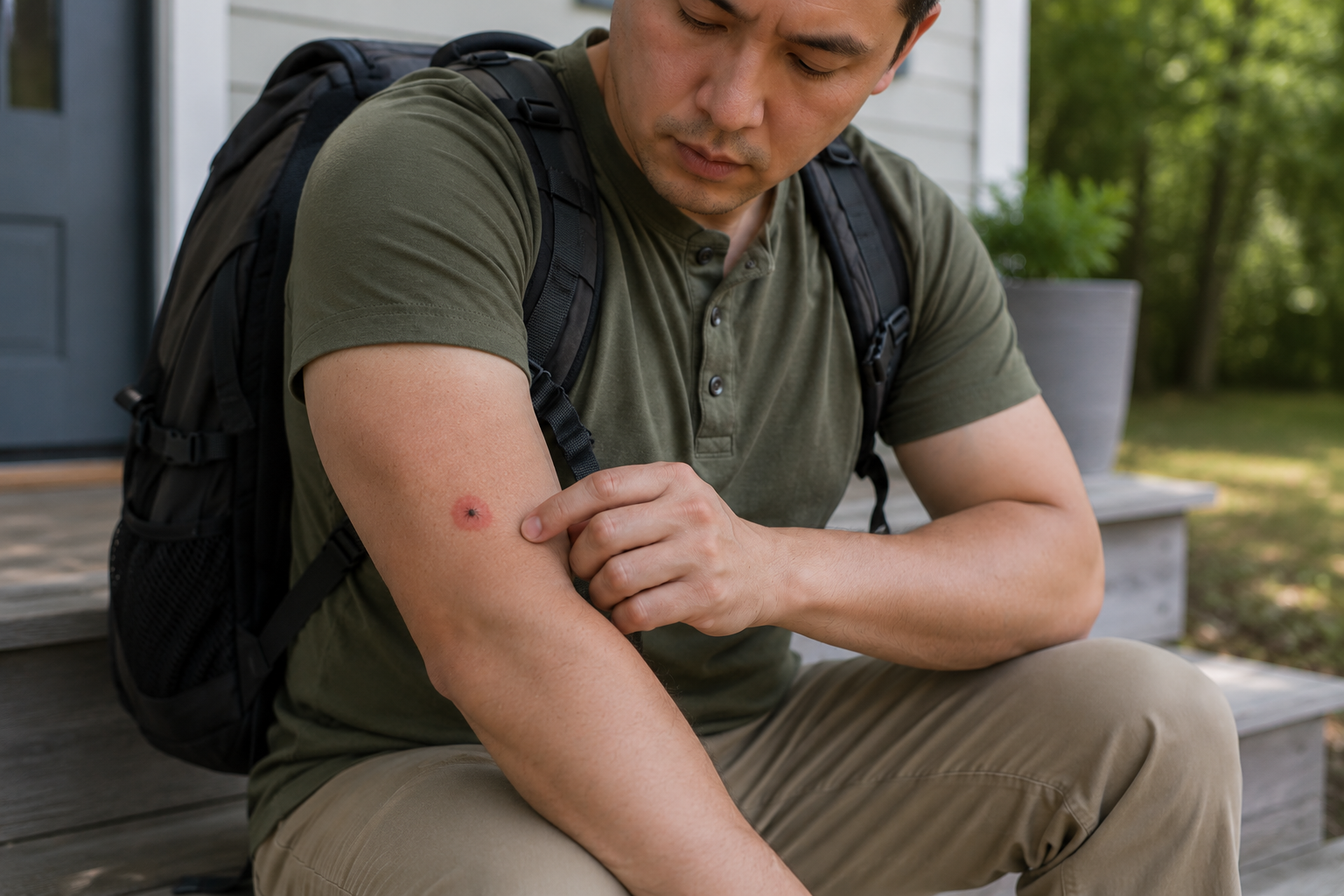
You were pulling weeds in the backyard over the weekend, and now there's a small dark spot on your leg that you're pretty sure is a tick. It's still attached, and you're not entirely sure what to do next.
This article covers how to find and remove a tick properly, what early signs of Lyme disease to watch for, and when tick bite treatment with antibiotics makes sense.
How to Safely Remove a Tick
If you've found a tick attached to your skin, it's important to remove it as soon as possible. The longer a tick remains attached, the greater the chance it can transmit disease-causing germs, including those that cause Lyme disease. Prompt removal is more important than using home remedies or complicated removal techniques.
Use a clean pair of fine-tipped tweezers to grasp the tick as close to the skin as possible, ideally where its mouthparts enter the skin. Pull the tick straight upward with slow, steady pressure. Avoid twisting, jerking, or squeezing the tick, as this can cause the mouthparts to break off and remain embedded in the skin.
Try not to squeeze or crush the body of the tick during removal. Doing so may agitate the tick and force infected fluid back into the bite site, which can actually increase the risk of infection rather than reduce it. Once the tick is out, clean the bite site and your hands with soap and water. Avoid old home remedies like covering the tick with petroleum jelly or a lit match, since these methods don't work well and can delay proper removal.
What to Do With the Tick After Removal
Once you remove the tick, it helps to know what type of tick you're dealing with. Different types of ticks carry different risks, and a deer tick, also called a blacklegged tick, is the type most associated with Lyme disease in the United States.
You can place the tick in a sealed bag or container and, if you want more certainty, some services offer a tick test to identify the species and check whether it's a tick that carries Lyme disease. This isn't required, but it can be helpful information to share with a health care provider if symptoms develop later.
If possible, make a note of how long you think the tick was attached, since attachment time can affect your risk of infection. According to the CDC, in most cases the ticks that transmit Lyme disease need to be attached for at least 36 to 48 hours before transmission is likely. Removing a tick as soon as possible can significantly reduce your risk.
Early Signs of Lyme Disease to Watch For
Not every tick bite leads to Lyme disease, and many bites heal without any issue at all. That said, it helps to know what to watch for in the weeks after a tick bite.
The most recognizable sign is a rash after a tick bite known as erythema migrans, which often looks like a red patch that expands outward, sometimes with a lighter area in the middle giving it a bullseye appearance. This rash typically appears within three to thirty days following a tick bite, and not everyone develops the classic bullseye look, so any expanding rash near a bite site is worth mentioning to a provider.
Alongside or instead of a rash, some people notice fatigue, headache, mild fever, chills, or joint aches in the days or weeks after a tick bite. These associated symptoms can be easy to mistake for a common virus, which is part of why early Lyme disease sometimes gets missed at first. If you live in or have recently traveled through an area where Lyme disease is common, it's worth keeping these symptoms in mind even without a visible rash.
When Tick Bite Treatment Is Necessary
Not every tick bite requires antibiotics. Whether preventive treatment is recommended depends on several factors, including how long the tick was attached, the type of tick, and whether Lyme disease is common in the area where the bite occurred.
In certain situations, a single dose of Doxycycline given within 72 hours of removing an attached tick can help prevent Lyme disease from developing in the first place. This preventive approach is generally reserved for higher risk bites, such as a deer tick that was attached for more than 36 hours in an area where Lyme disease is common.
If a rash or other symptoms do develop, a full course of antibiotics is the standard treatment option for confirmed or likely Lyme disease, and most people respond well when treatment starts early. Because there's often a fairly narrow window where preventive treatment is most useful, a telehealth visit can be a convenient way to get evaluated quickly after you've been bitten by a tick. A provider can review the timeline, look at your rash, and help determine appropriate treatment without unnecessary delay.
Tips to Help Prevent Lyme Disease
Prevention mostly comes down to reducing how often ticks get the chance to bite in the first place. A few habits that help prevent tick bites:
Wear long sleeves and tuck pants into socks in wooded or grassy areas
Use an EPA registered insect repellent on skin and clothing
Check your body carefully for ticks after spending time outdoors
Shower soon after coming inside to wash off unattached ticks
Check your skin thoroughly after spending time outdoors, paying close attention to warm, hidden areas such as behind the knees, the scalp, under the arms, around the waistband, and in the groin. Finding and removing a tick early gives you the best chance of preventing Lyme disease, since the bacteria that cause the infection are less likely to be transmitted if the tick hasn't been attached for long.
If you do find yourself with concerning symptoms after a tick bite, whether that's a spreading rash or something more like the flu, reaching out to a doctor is always the safer choice. Lyme disease is common in some parts of the country, so most primary care and telehealth providers are experienced in evaluating suspected cases and can quickly determine whether you need testing, treatment, or monitoring.
This blog is for informational purposes only and is not a substitute for professional medical advice, diagnosis, or treatment. Always consult your doctor or a qualified healthcare provider with any questions you may have regarding a medical condition.
More Articles
Related Reading

Sep 2, 2026
AI in Chronic Disease Management: How It Helps Patients
AI in chronic disease management revolutionizes patient care. Discover how artificial intelligence helps patients with chronic illnesses via personalized health management.
Sep 2, 2026
Long COVID Fatigue: What Actually Helps, According to the Latest Research
Long COVID fatigue can be exhausting and confusing to manage. Here's what recent research says about treatment options and how a doctor can help.

Sep 2, 2026
Taking Medication? Here's Why Your Morning Coffee Timing Matters
Learn how coffee timing impacts medication. Caffeine can change how your body absorbs drugs, affecting their effectiveness. Here's why your morning coffee could matter.
Ready to speak with a board-certified physician?
Get expert care from the comfort of your home — no insurance required.