
Company News
Beyond Weight Loss: New Research Suggests GLP-1 Medications May Also Improve Mood
New research suggests GLP-1 medications may improve mood by altering the gut microbiome. Here is what adults taking or considering GLP-1 therapy should know.
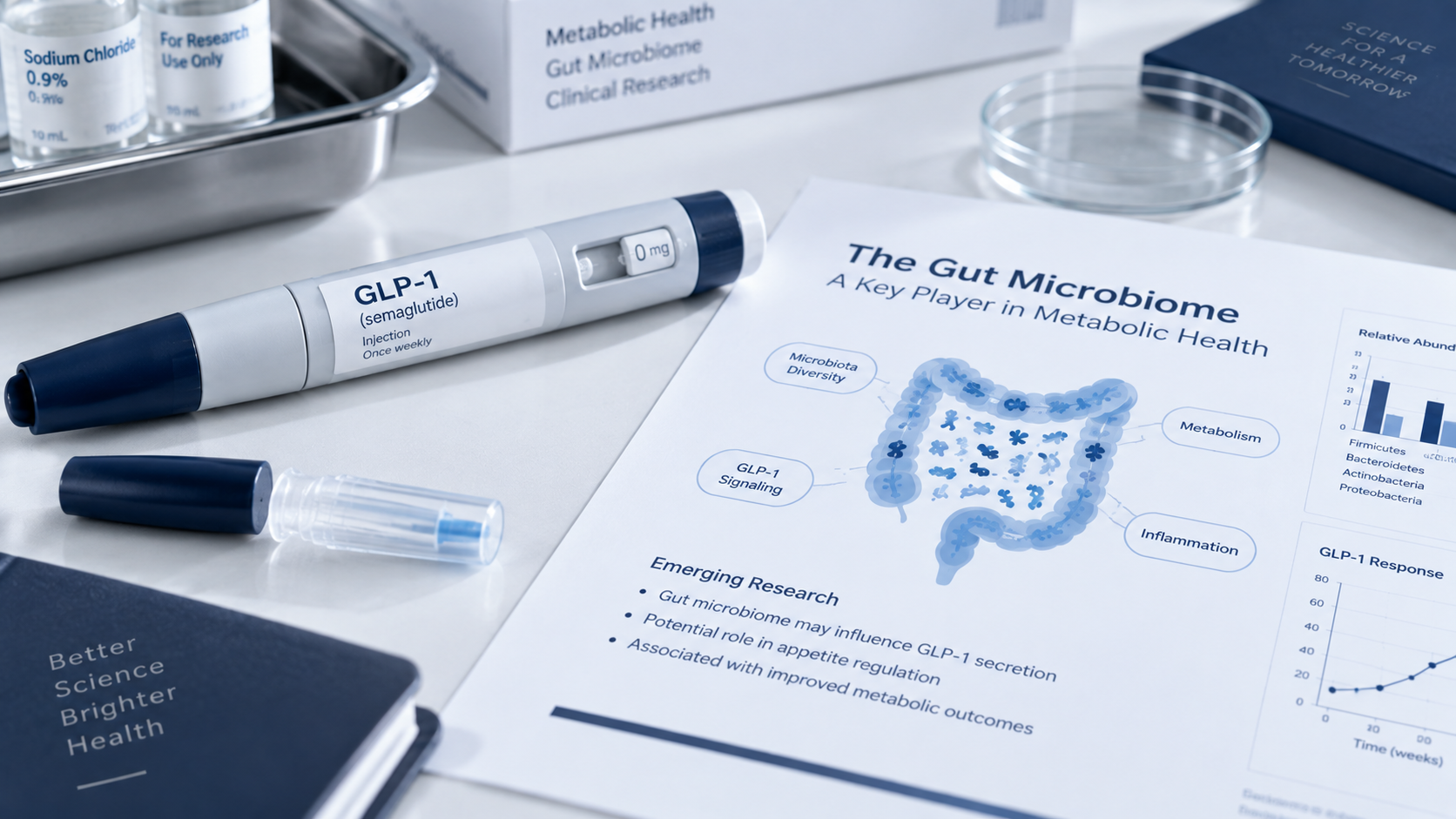
Since semaglutide and similar GLP-1 receptor agonist medications became widely available for weight management, something unexpected has emerged in patient reports: some people taking these drugs feel noticeably better, not just physically, but emotionally.
A new study published in the journal Cell Host and Microbe is now offering a scientific explanation for why that might be happening, and the answer involves one of medicine's most discussed frontiers: the gut-brain connection.
Researchers at Southeast University and Huazhong University of Science and Technology in China set out to investigate the relationship between GLP-1 therapy and depression, specifically whether these medications were affecting mood through changes in gut microbiota rather than through direct action on brain receptors. Using mouse models of chronic stress, the team tested the GLP-1 drug Liraglutide and found that it significantly reduced depression-like behaviors.
Crucially, this effect persisted even in mice where brain GLP-1 receptors had been blocked, suggesting the mood benefits were not coming from the brain pathway researchers had previously assumed.
What the investigators discovered instead was a previously uncharacterized gut-brain pathway. When liraglutide was administered, it accumulated in the intestine rather than traveling to the brain. There, it triggered a significant increase in a gut microbe called Lactobacillus delbrueckii. That microbe produces a molecular precursor that the body converts into an endocannabinoid compound known as 2-arachidonoylglycerol, or 2-AG, which in turn reduces hyperactivation in the brain's stress-related regions, effectively dampening depressive behavior.
When the researchers cleared the mice's gut microbiomes using antibiotics, the antidepressant effect of liraglutide disappeared entirely, confirming that the mood-elevating properties of the drug depended entirely on the presence of living gut microorganisms.
The research also found that natural GLP-1 levels were measurably lower in humans with major depressive disorder compared to healthy controls, adding another layer of evidence that the GLP-1 system may play a role in mood regulation beyond its well-known metabolic functions.
For adults currently taking GLP-1 medications for weight management or diabetes, this research adds an intriguing dimension to a treatment they may already be using. For those who have noticed mood improvements since starting therapy, there may now be a biological explanation. For those managing both metabolic conditions and depression or anxiety, these findings open up a genuinely interesting area of inquiry worth discussing with a physician.
It is important to note that this research was conducted in animal models, and translating those results to human clinical practice requires further study. But the findings suggest that the therapeutic potential of GLP-1 medications may extend well beyond weight loss, and that the gut microbiome may be a key part of how those benefits are delivered.
References / Sources
Technology Networks. GLP-1 Drugs May Boost Mood via the Microbiome. TechnologyNetworks.com.
Neuroscience News. GLP-1 Drugs Reduce Depression, Boost Stress-Calming Gut Bacteria. NeuroscienceNews.com.
Cell Host and Microbe. Microbiota-Driven Gut-Brain Signaling Underlies Antidepressant Effects of a GLP-1 Analog. Cell.com.