
Company News
Could GLP-1 Medications Do More Than Treat Obesity? New Research Points to an Anti-Aging Effect
A new study published in Nature found that semaglutide extended the lifespan of older female mice by 12 percent. Here is what adults should know about what the research means for human longevity.
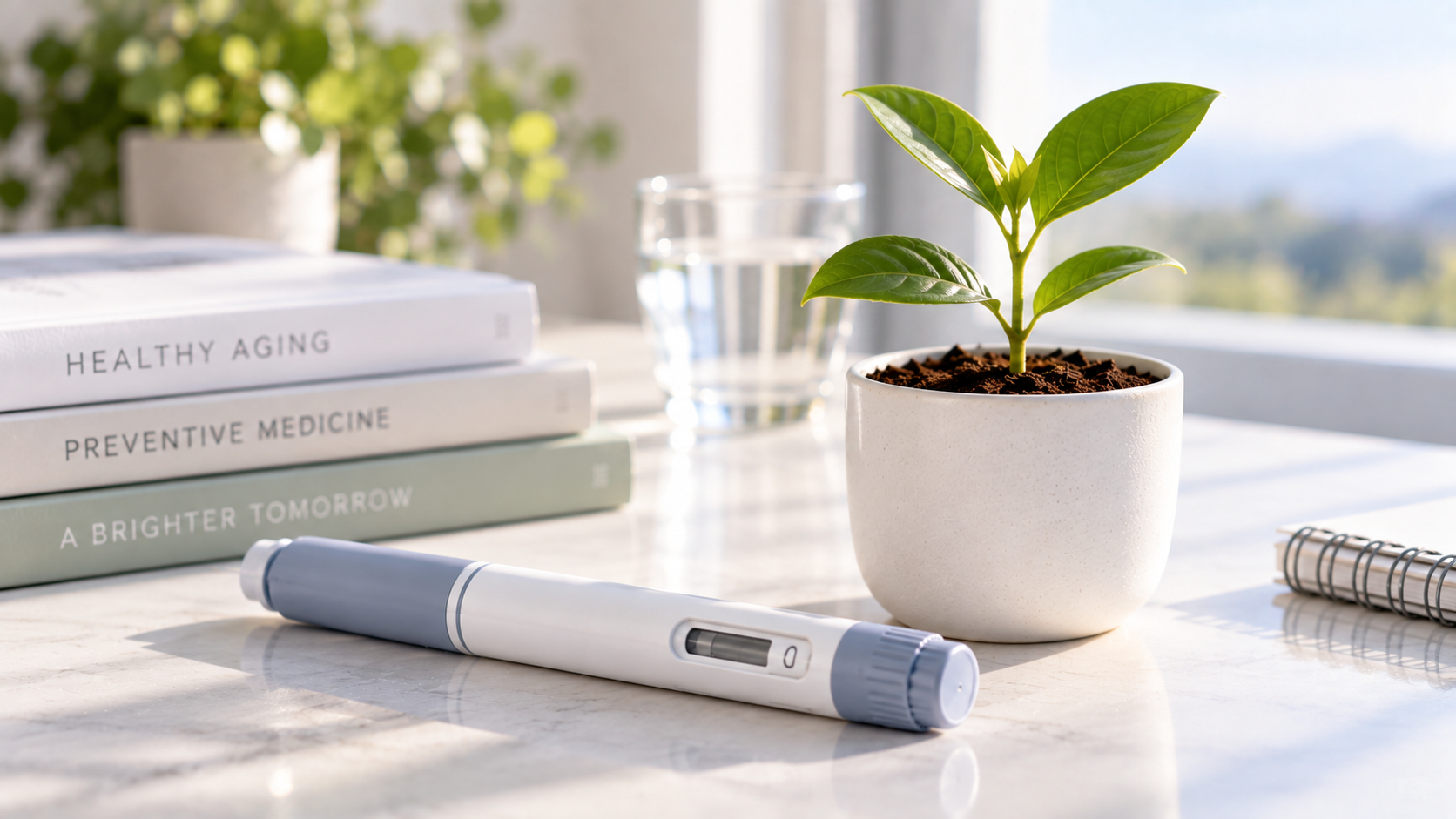
GLP-1 medications have already reshaped how medicine approaches weight management and metabolic disease. Now, a study published in the journal Nature is raising a question that researchers have been quietly exploring for some time: could these drugs also slow the biological process of aging itself?
The research, led by Danica Chen, a longevity scientist at the University of California, Berkeley, administered semaglutide to female mice that were 20 months old, roughly the biological equivalent of a woman in her early 60s.
One group received daily semaglutide injections for the remainder of their lives, while a comparison group received only saline.
The results were striking. Mice treated with semaglutide lived a median of 834 days, compared to 742 days for the untreated group, an increase of roughly 12 percent. Translated into human terms, that kind of proportional gain would be significant by any measure.
The lifespan extension was not the only finding worth noting. Mice receiving semaglutide also outperformed their untreated peers across a range of physical and cognitive measures. They balanced longer on rotating rods, ran farther on treadmills, navigated mazes more quickly, and demonstrated higher levels of curiosity and exploratory behavior. Molecular analysis of their tissues revealed reduced markers of cellular aging, including lower levels of inflammation and DNA damage, two of the most well-documented biological hallmarks of getting older.
One of the more scientifically interesting dimensions of the study involved how semaglutide's effects compared to those of calorie restriction, a dietary approach that has long been associated with lifespan extension in animal models. The research team directly tested this comparison and found that semaglutide closely mimicked many of the anti-aging benefits of eating less, while also producing additional gains in areas like memory and glucose regulation that calorie restriction alone did not fully replicate. This suggests the drug may be operating through mechanisms that go beyond simply reducing food intake.
Researchers and outside experts were careful to contextualize what the findings do and do not establish. This was a study conducted in female mice from a single strain, and the biology of aging varies significantly across species. Human longevity effects remain entirely unproven, and several scientists have noted that accelerating certain biological processes could potentially have unintended consequences in some individuals. The study's authors themselves framed the findings as a foundation for further investigation rather than a clinical recommendation.
For adults currently taking semaglutide for weight management or diabetes, this research adds an intriguing new dimension to a medication they may already be using. For those curious about what the evolving science of GLP-1 therapy could mean for their long-term health, a conversation with a board-certified physician is always the most informed place to start.
References / Sources
Smithsonian Magazine. GLP-1 Weight-Loss Drugs Can Slow Aging and Extend Life Span, Mouse Study Suggests. September 2, 2026. SmithsonianMag.com.
Chen, D. et al. Late-Life Semaglutide Treatment Slows Ageing and Extends Lifespan in Female Mice. Nature, September 2, 2026.
National Institutes of Health. Semaglutide Extends Lifespan and Slows Physiological Aging in Healthy Mice. NIH.gov.